
 03-6264-4279


― 文化と技を、未来へ重ねる衣 ―
Garments that layer culture and craft into the future
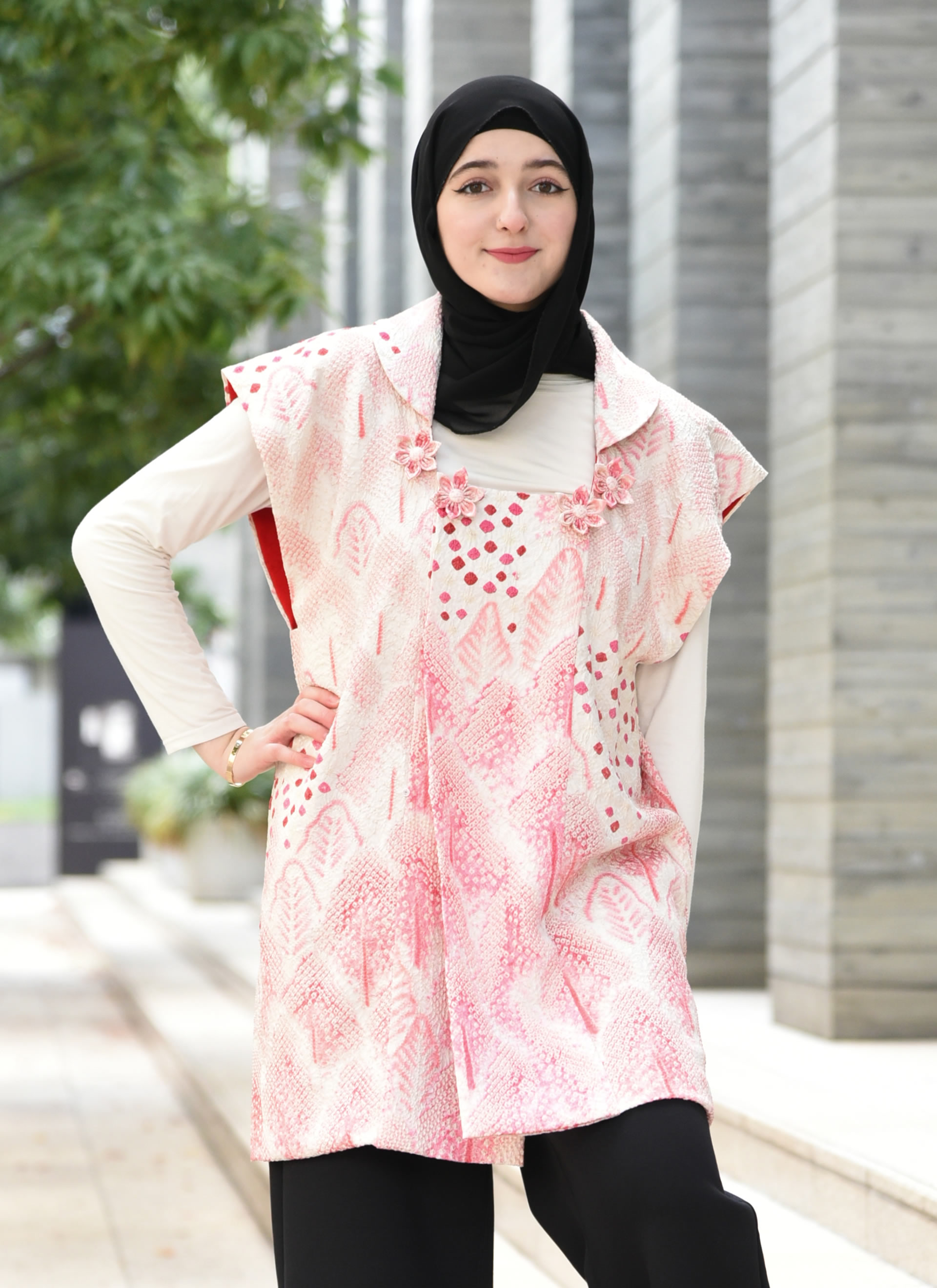
WG-02|hifu
被布は日本の伝統行事七五三において、3歳の女の子が着物の上に重ねる上衣です。
幼子が無事に育つ感謝と、健やかな成長の祈りを込めた被布を、本作では、未来に伝統を伝える衣として表現しました。
The hifu is the sleeveless overcoat worn over a kimono by three-year-old girls at Shichi-Go-San.
This piece expresses gratitude for a child's safe growth and presents the hifu as a garment that carries tradition forward.
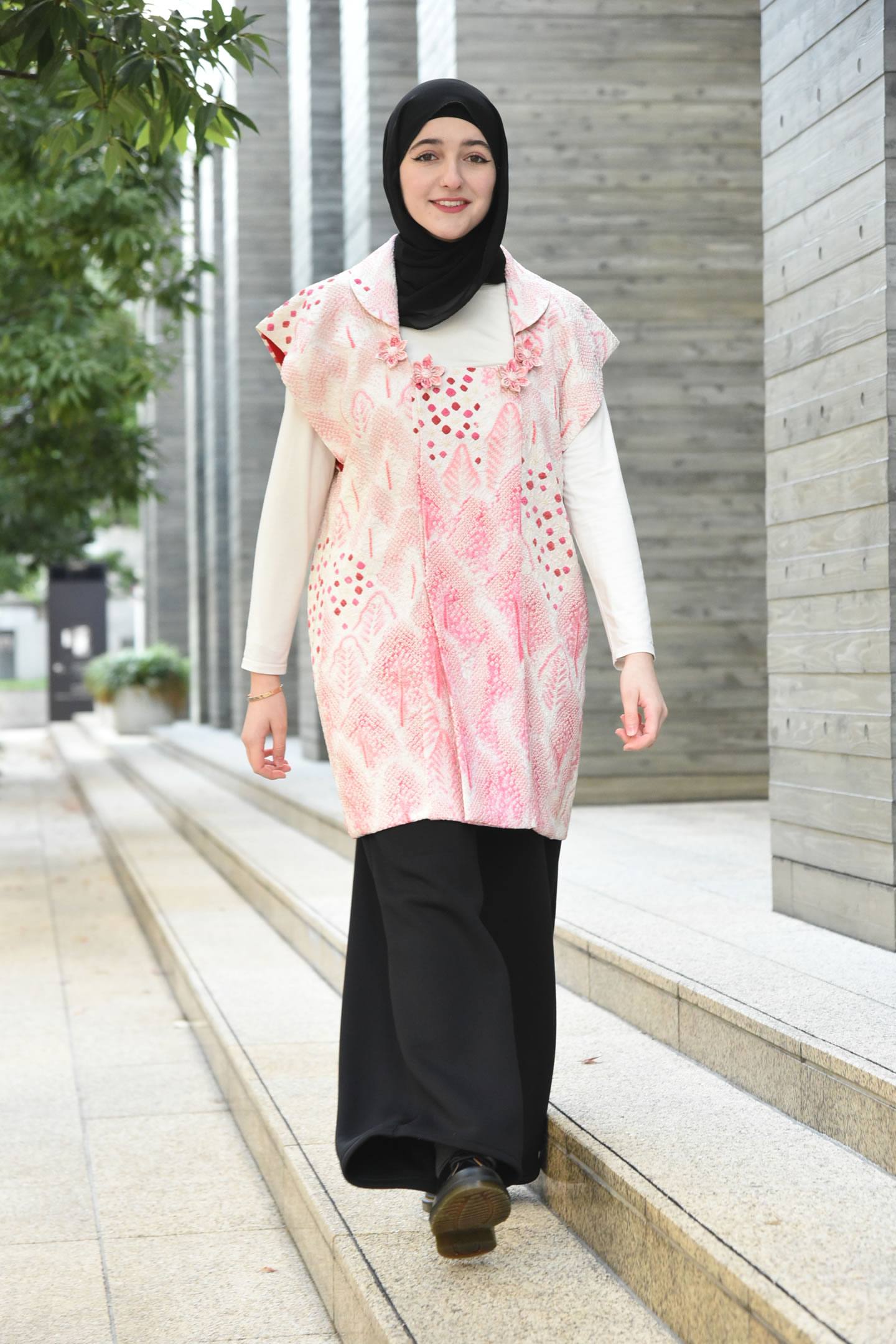

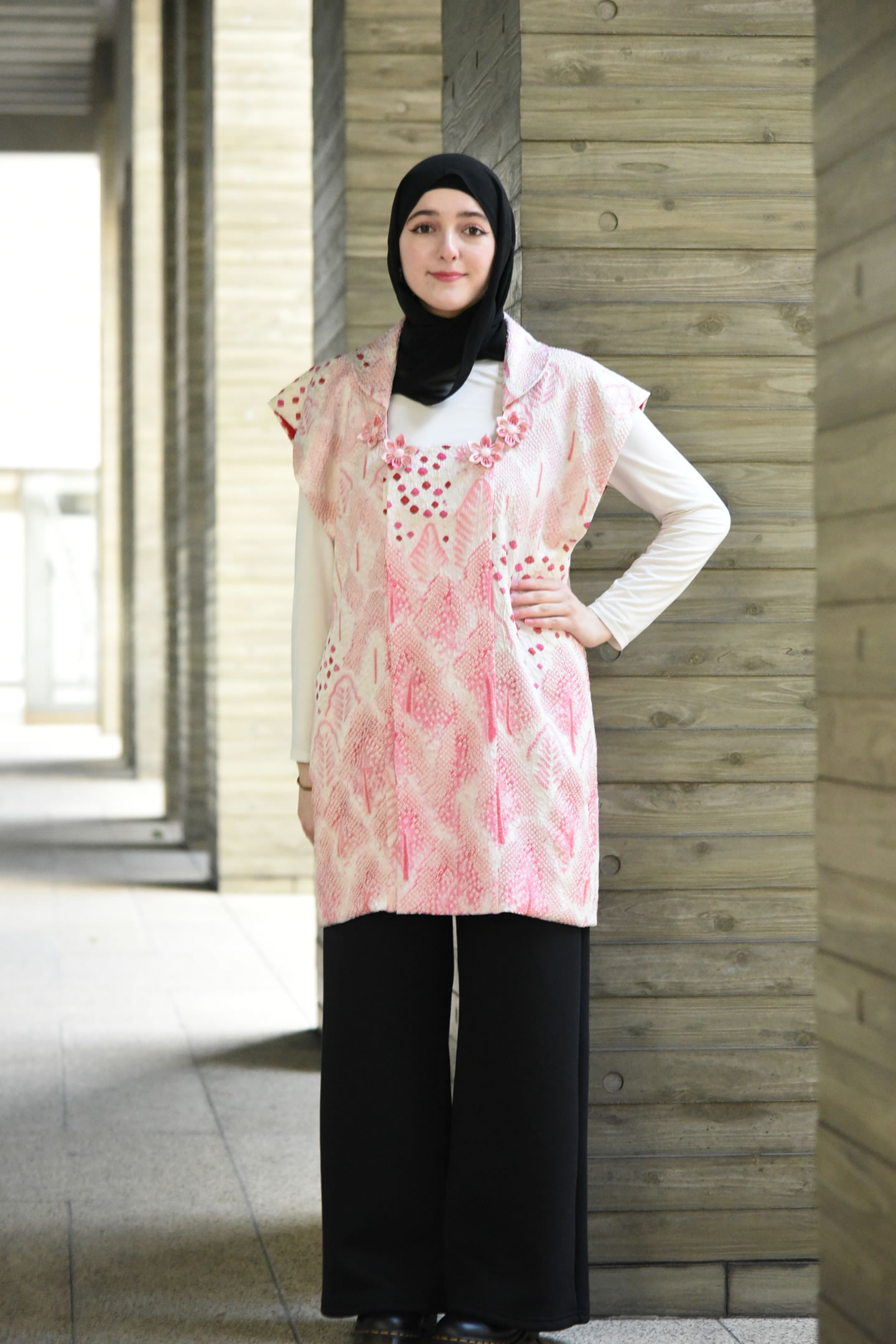
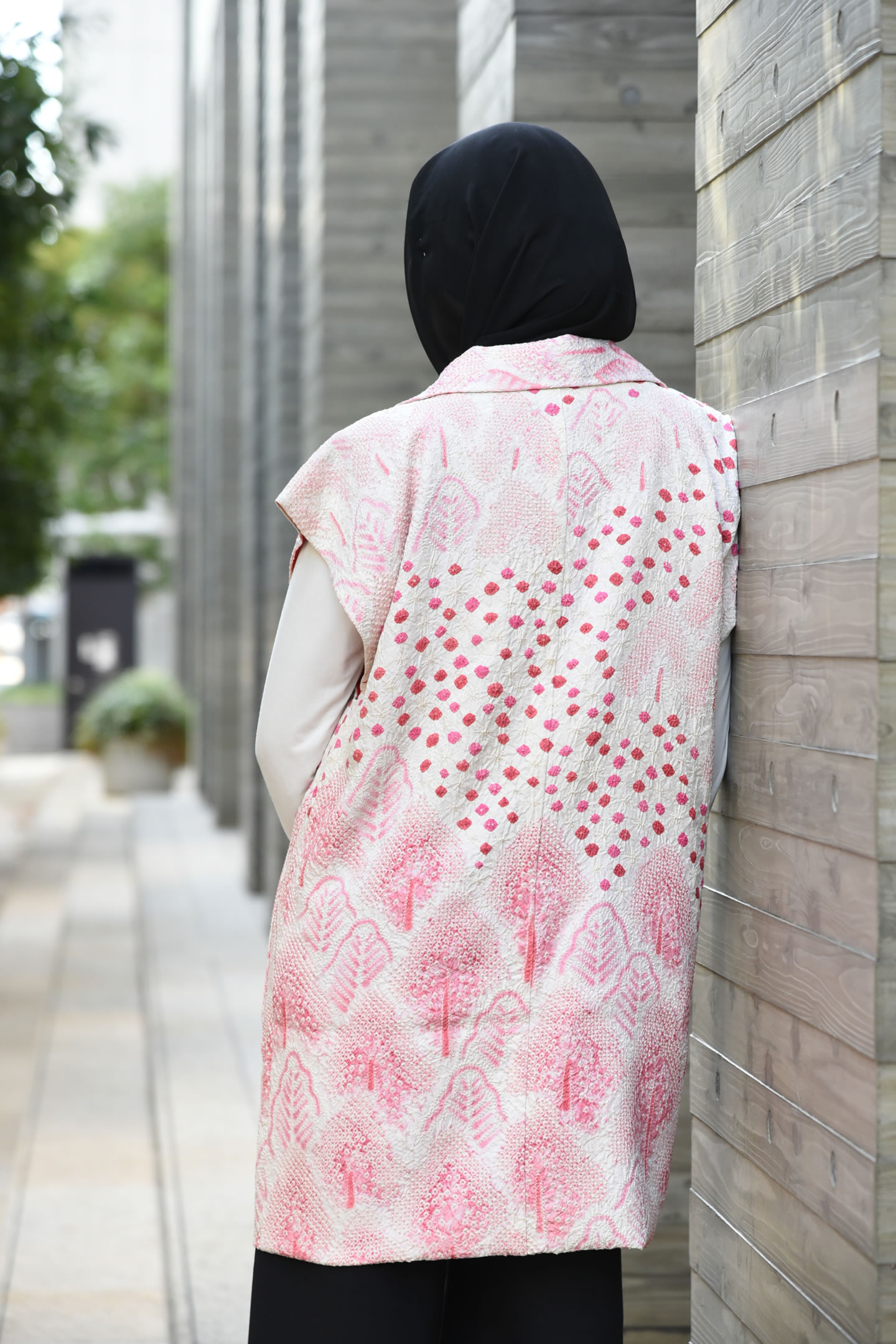
近年、伝統的な染織技法は急速に減少しています。作り手が減り、絞りの反物は年々希少になっています。
だからこそ、この1着は、文化の断片を未来へ渡す作品となっています。
Traditional dyeing and weaving are rapidly disappearing; shibori cloths have grown rare.
For that reason, this hifu serves as a vessel to pass cultural fragments on.
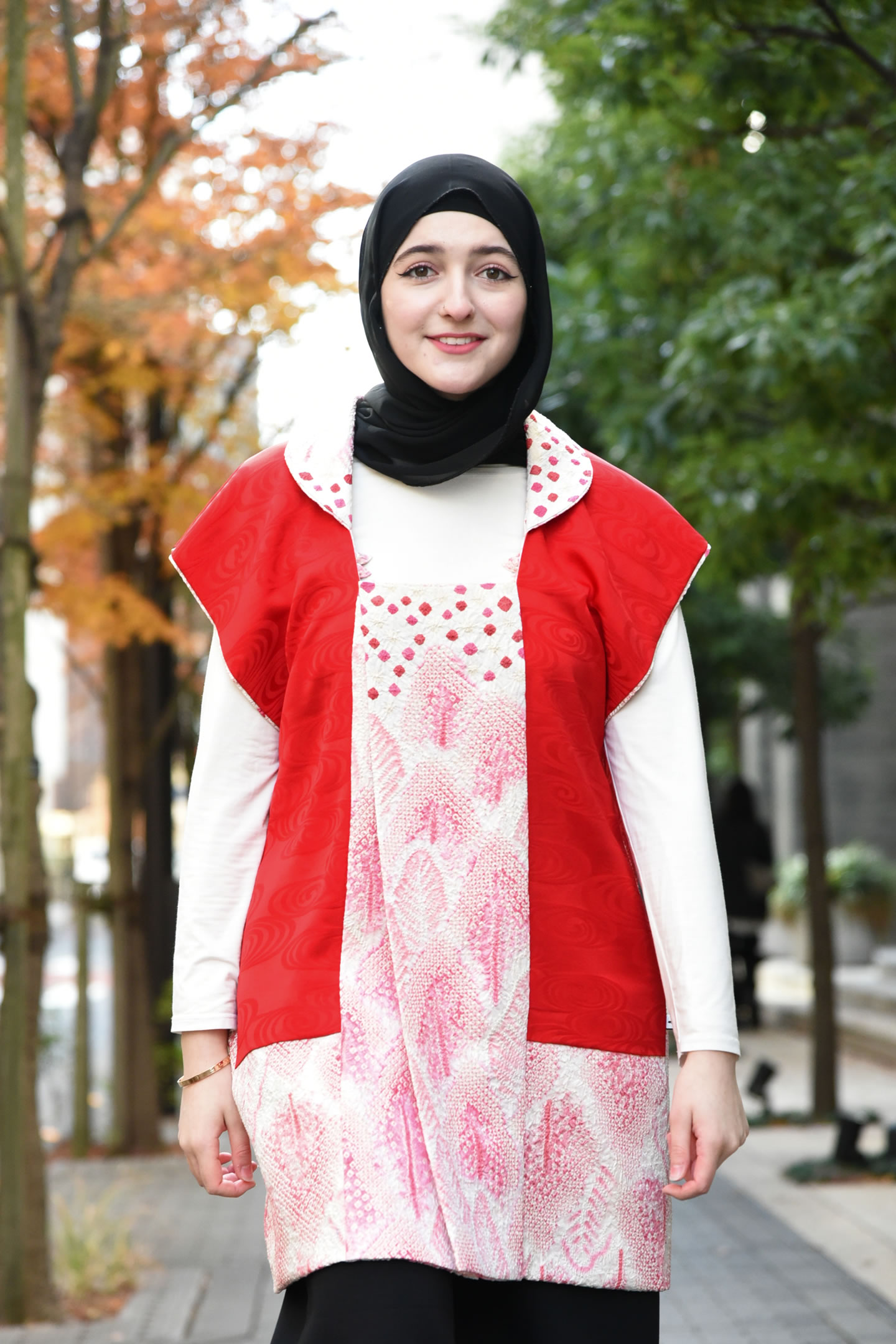
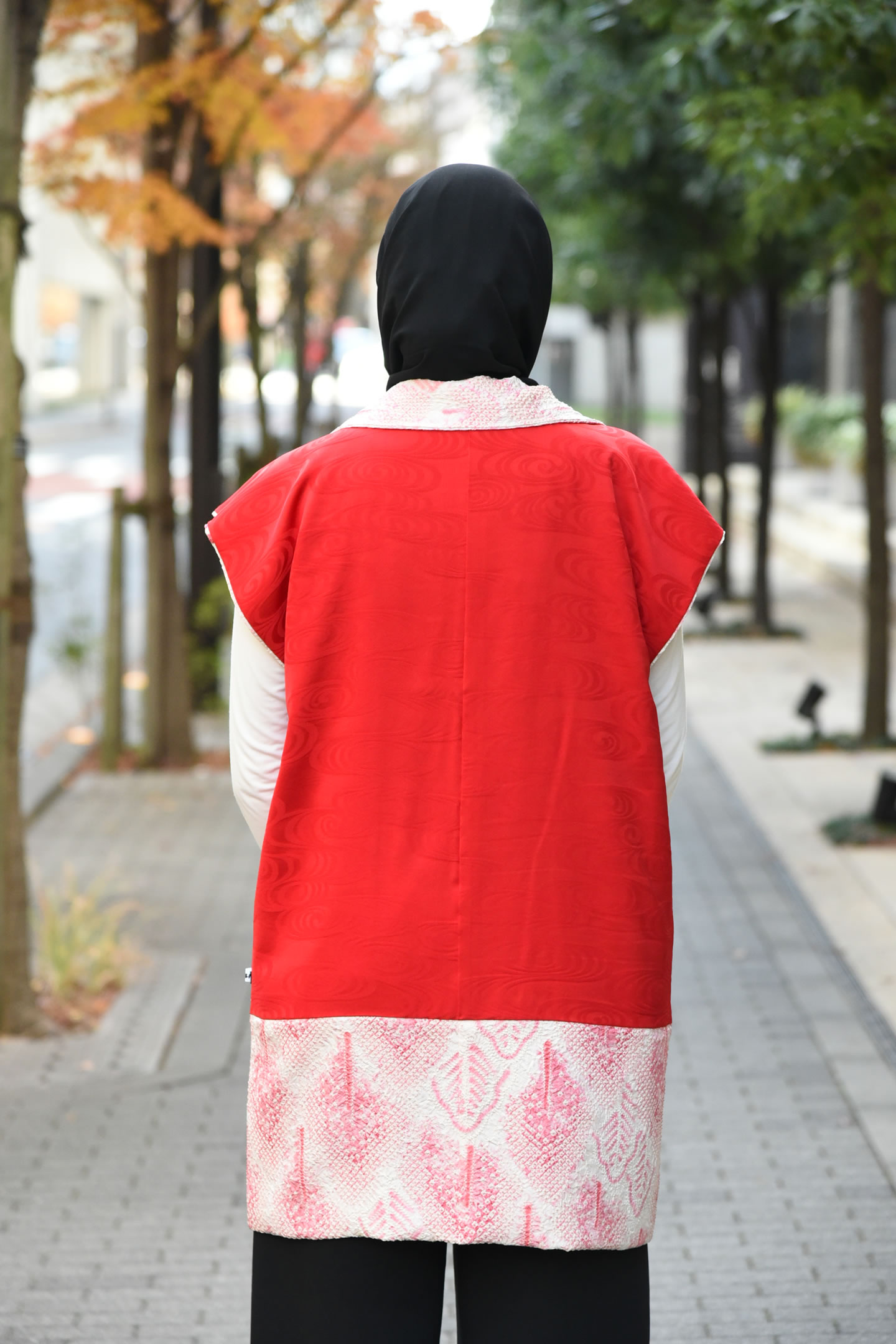
装いで、表地には品格を、裏地には祈りを込めるのは、日本人の美意識です。
この作品でも、裏地は、現代では染めることがとても難しくなっている紅色を使用しました。
紅色は、赤色よりもっと濃く深い色合いです。
平安時代には貴族の間で流行し、魔除けの色、生命の色、守りや祈りの色としても扱われました。
In Japanese aesthetics, the outer fabric embodies dignity while the lining carries prayer.
For this piece, the lining uses a crimson hue-a color now extremely difficult to dye.
Crimson is a deeper, richer shade than red.
Popular among nobles during the Heian period, it was regarded as a color warding off evil, a color of life, and a color of protection and prayer.
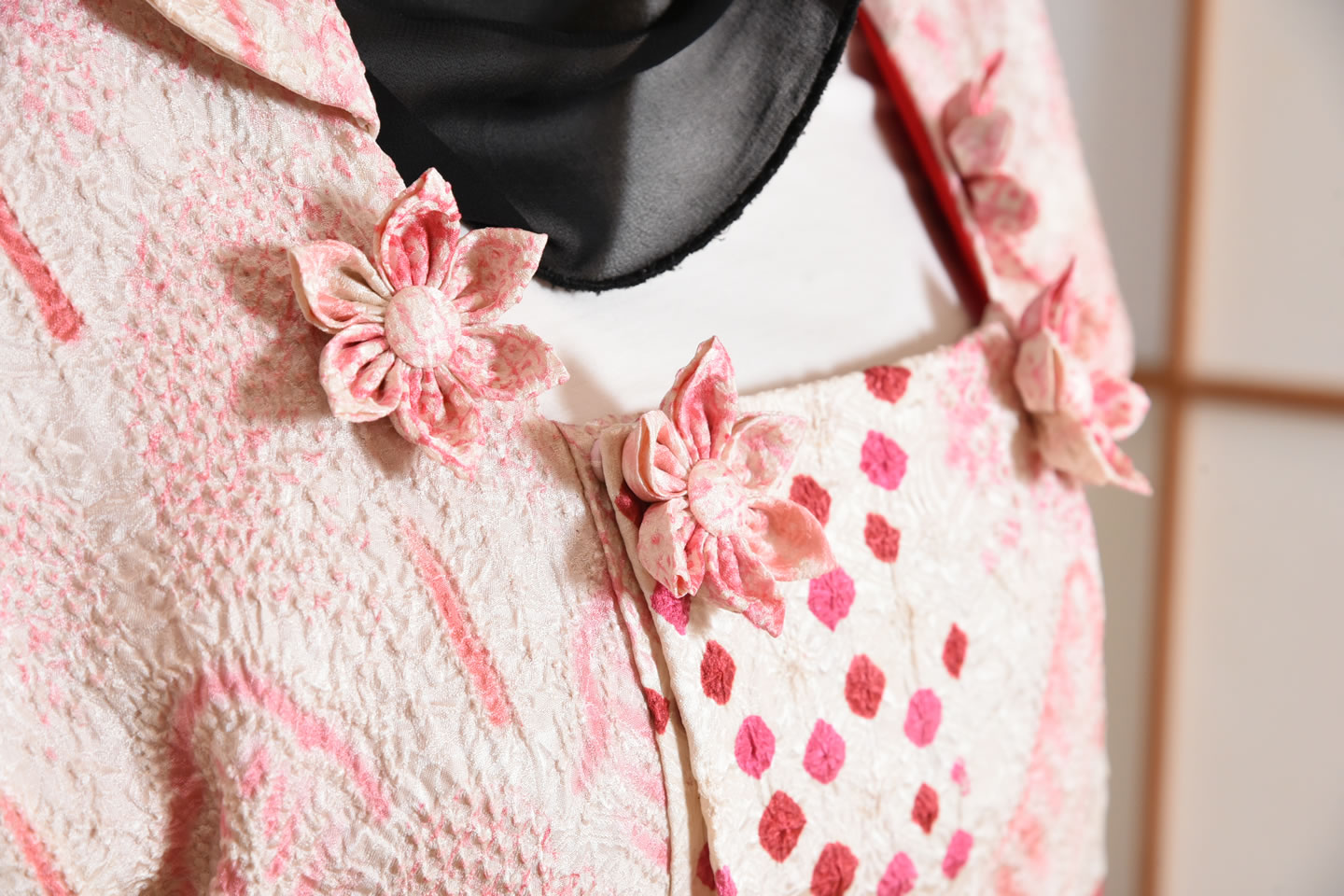
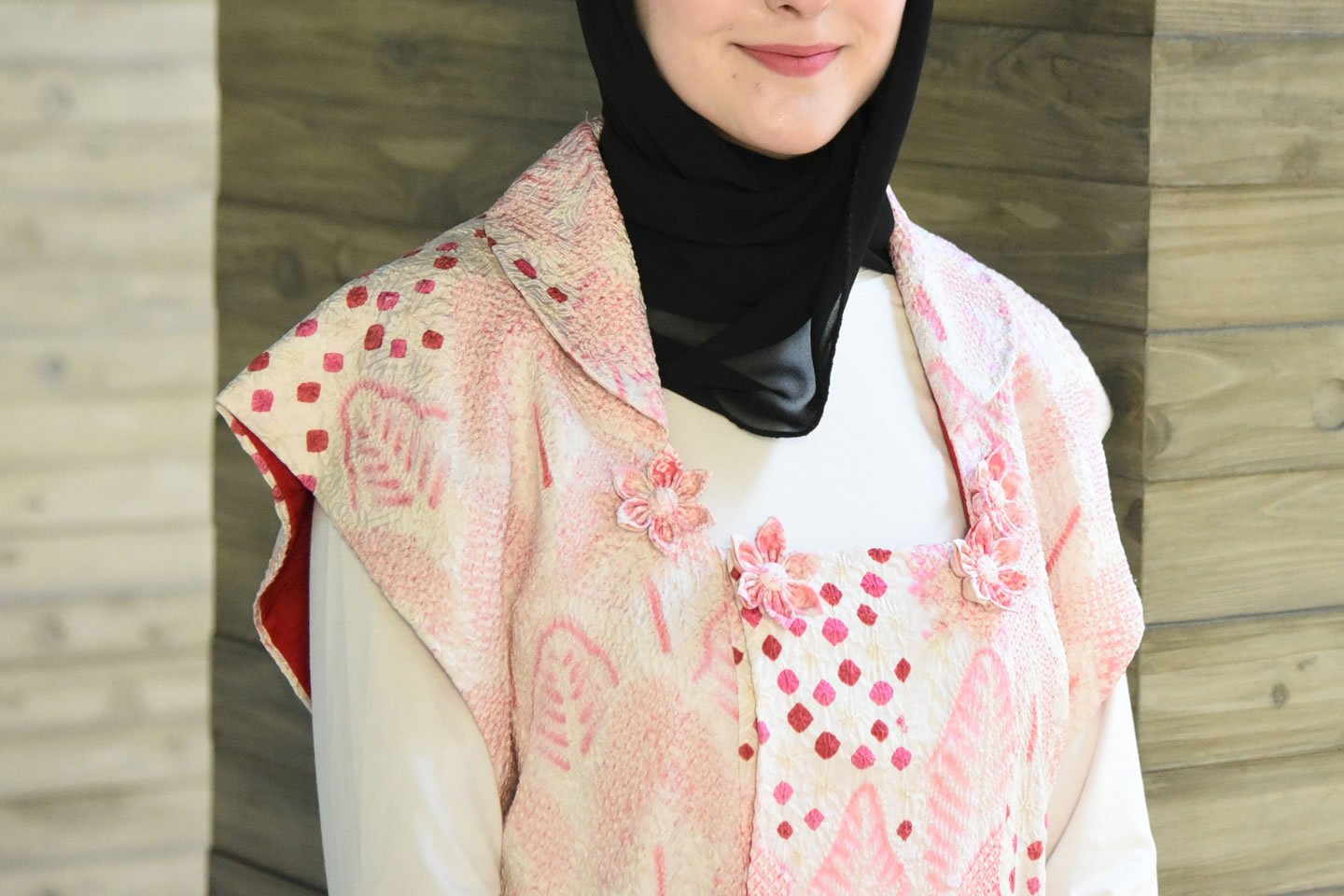
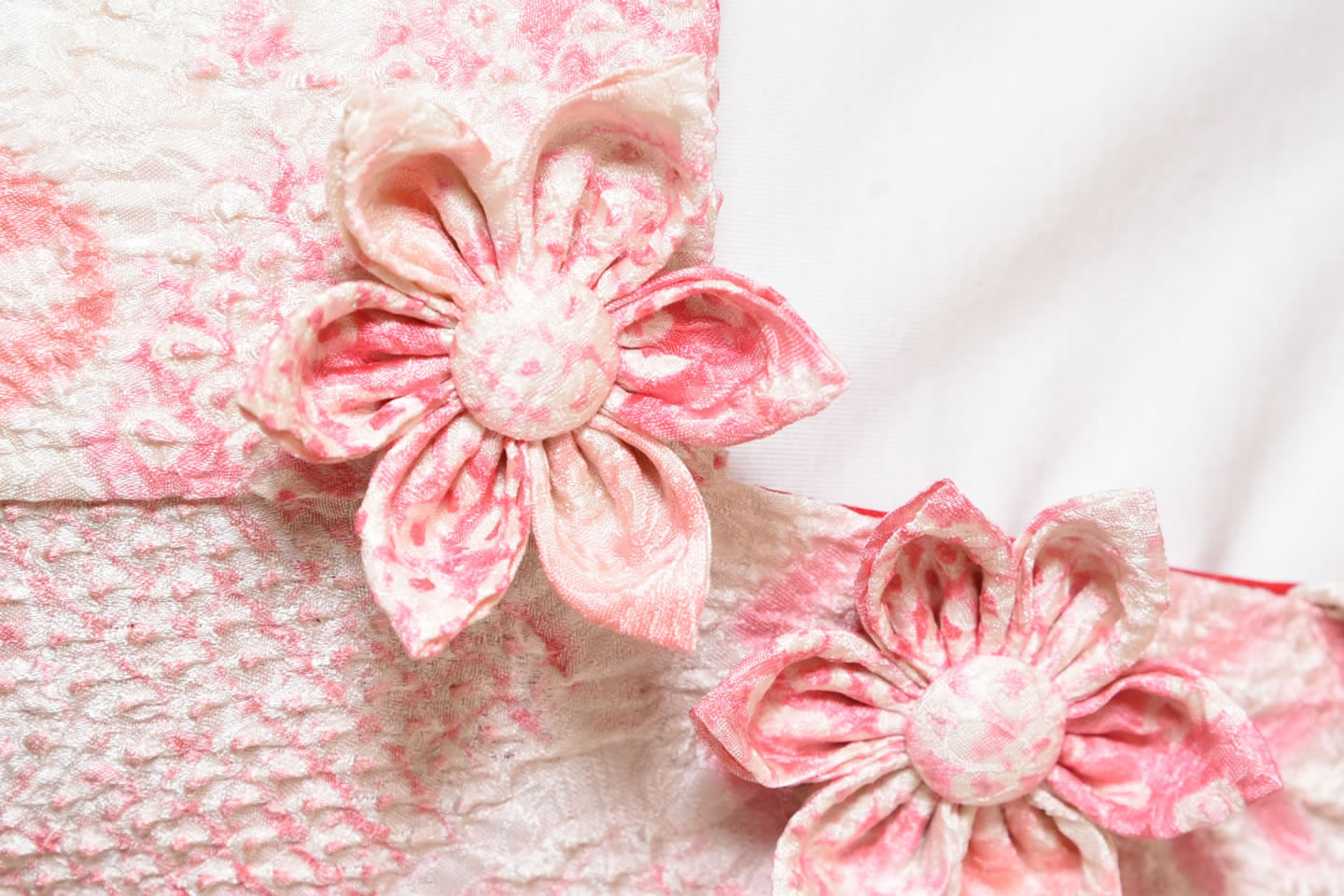
- つまみ細工 -Tsumami zaiku-
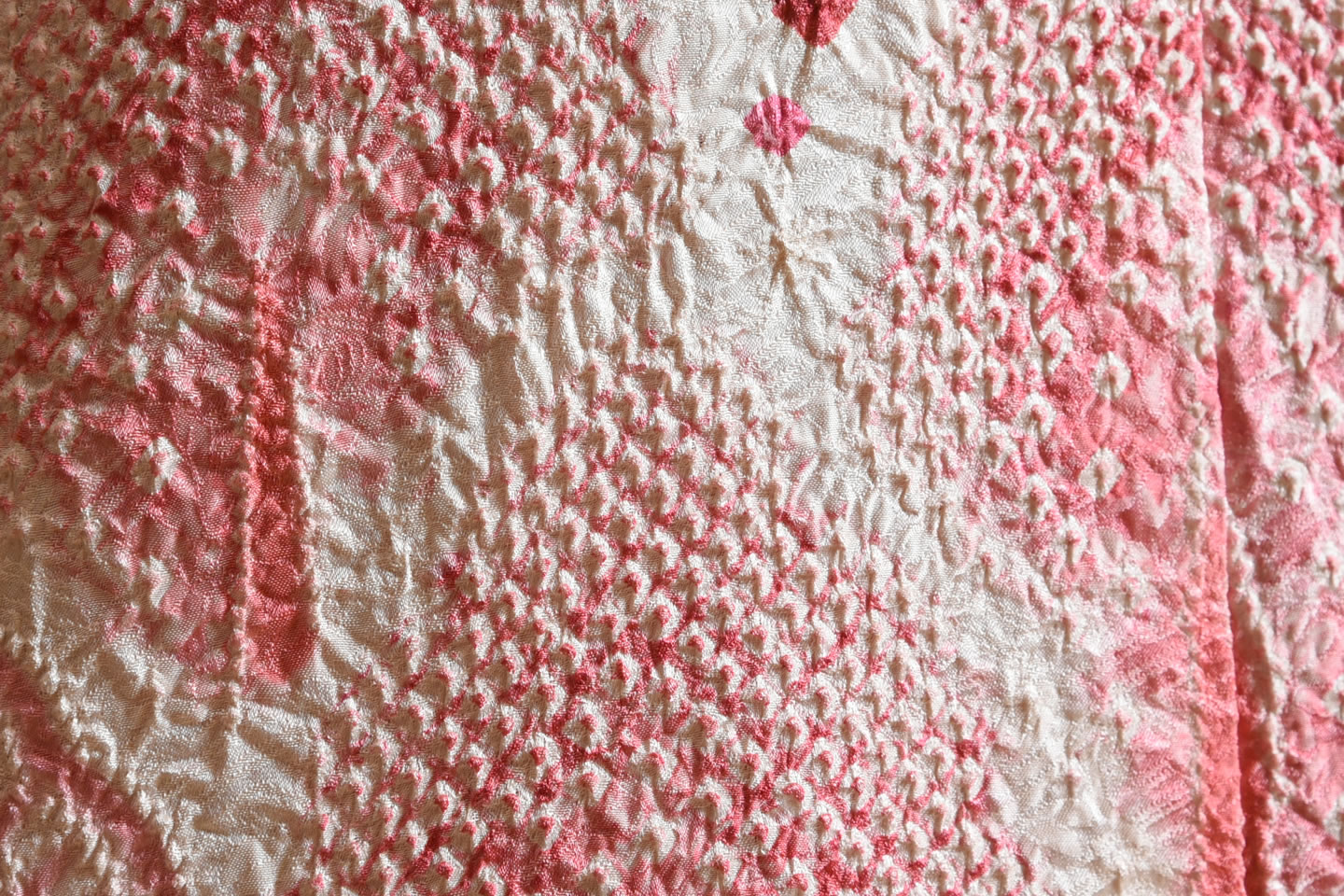
- 絞り -Shibori-
絞りは、手作業で生地を糸で何回も縛ってから染める伝統的な技法です。
模様を浮かび上がらせて独特の風合いが生まれ、同じものがない完全な一点ものの魅力があります。
正方形に切った布を折りたたんで小花にしたつまみ細工には、愛情深い可愛さがあります。
Shibori is a hand-binding dyeing technique that produces raised textures and unique patterns; each piece is one-of-a-kind.
Tsumami zaiku-small folded-fabric flowers made from square cuts?adds a tender charm.
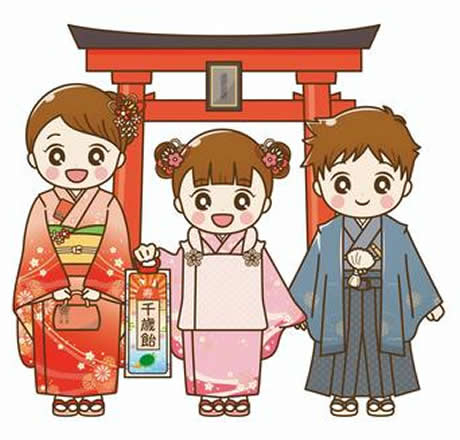
七五三は、平安時代の儀式に由来する日本の11月15日前後の伝統行事です。
3歳の女の子、5歳の男の子、7歳の女の子がこれまでの成長を氏神様に感謝し、今後の健康と長寿を祈願します。
Rooted in Heian rites and observed around November 15, Shichi-Go-San is when families visit the local shrine to give thanks for children's growth and pray for their health: girls aged 3 and 7, and boys aged 5.
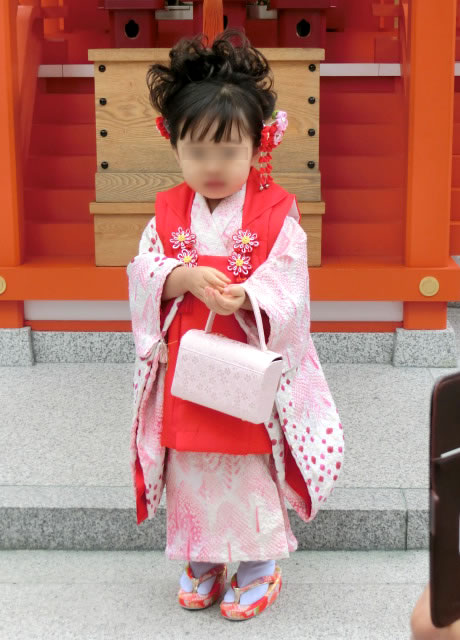
被布は、江戸時代末期に茶人や俳人、隠居男性の防寒・礼装として始まった、着物の上に着る袖なしの上着です。
後に女性や子供の防寒着として普及し、明治以降に帯を締めない七五三の3歳児用の和装の正装となりました。
紐や帯の締め付け部分を隠す役割も持ちます。
Originating in the late Edo period as a sleeveless coat, the hifu later became a child's outerwear and, from the Meiji era, the formal dress for a three-year-old girl who do not wear an obi.
It also conceals ties and fastenings.
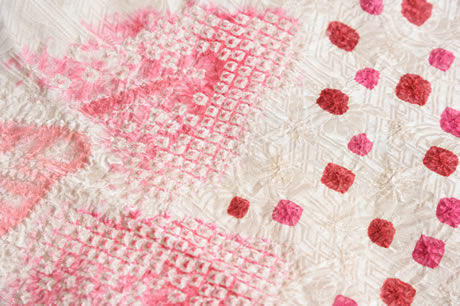
着物の絞り技法は、布を糸で括る、縫う、折る、板で挟むなどして染料が浸透しない部分を作り、立体的な「シボ」と染め分けで模様を描く伝統技法です。職人の手作業で数万から数十万粒を括る「総絞り」は、一点物で高い価値を持ちます。
Shibori-binding, stitching, folding, and clamping?creates resist areas that form textured "shibo." So-shibori, where artisans tie tens of thousands of knots by hand, produces highly valued, unique works.
和裁は、日本の伝統的な衣装である着物を、反物(布)から手縫いで仕立てる技術です。
直線断ちを基本とし、布を傷めず解けば元の反物に戻せるのが特徴。
ミシンを使用せず、糸を隠す「くけ」や独特の「運針」技法を用いて、職人が1針ずつ丁寧に仕上げます。
生地:日本製絹
Wasai is the hand-sewing craft of making kimono from bolt to garment.
Using straight cuts so the cloth can be returned to bolt form, artisans finish every stitch by hand with traditional running and hidden-hem techniques.
Fabric : Japanese silk
ご相談内容により異なります(目安:2か月~)
価格帯
1,100,000円(税込)~
※素材・構成・仕様により個別にお見積りいたします。年齢・性別・国籍は問いません。
※モデル身長:165cmcm
Production time: varies by request (estimated from 2 months).
Price: from \1,100,000 (tax included).
Final quotations depend on materials and specifications.
Open to all ages, genders, and nationalities.
※Model Height:165cm
お問い合わせについて
下記よりお問い合わせください。
Inquiries
Please contact us using the form below.